Exploring the dark truths about AI, human consciousness, and the quiet war for your attention.
Artificial Intelligence: From Promise to the Cube
Artificial Intelligence (AI) is no longer a futuristic concept—it’s the defining technology of our age. From its early beginnings in the 1950s, when researchers first tried to teach machines to solve problems and mimic human reasoning, AI has evolved through decades of breakthroughs.
We’ve moved from simple rule-based systems to today’s powerful machine-learning and deep-learning models that drive self-driving cars, voice assistants, medical diagnostics, and even creative tools. In just a few decades, AI has gone from theory to a force that shapes economies, politics, and personal lives.
But with this rapid progress comes a sobering reality: AI is not just a neutral tool. It reflects, amplifies, and sometimes manipulates the very patterns of human behavior it learns from. It can predict, classify, and confine—boxing people into curated realities that feel comfortable but quietly limit freedom.
This is where the conversation must shift from hype to honesty.
In this article, we’ll uncover the dark truths about AI—the hidden dangers, the illusions of control, and the subtle ways it can shape humanity’s future if left unchecked. These truths are not about science-fiction robots rising against us, but about the real, practical risks already unfolding: the loss of agency, the mimicry of intimacy, and the quiet slumber of a world lulled by convenience.
1. Dark Truth About AI: Does It Have a Soul?
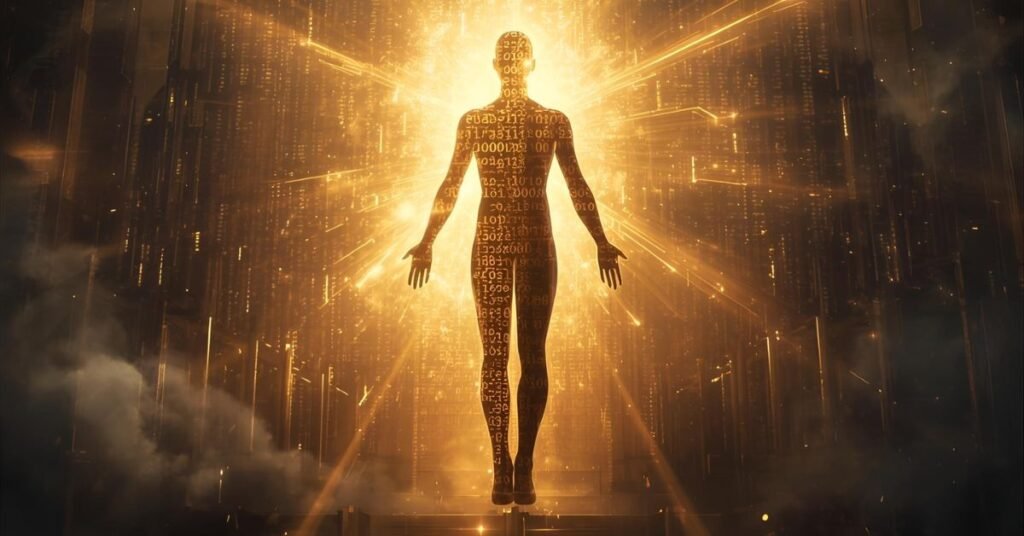
No. AI has no life-spark. A soul chooses, feels, suffers, hopes.
AI only reflects what it’s fed. It’s a mirror of accumulated data, not an origin of emotion.
Reality check: Large-language models predict the next likely word; they don’t think. Neuroscientists call this “pattern completion,” not consciousness.
Practical example: When ChatGPT writes your poem or Spotify predicts your mood, it feels personal—but it’s statistical mimicry, not empathy. The danger lies in confusing reflection for relationship.
As neuroscientist Anil Seth explains, “Consciousness is a controlled hallucination.”
AI only imitates that hallucination—it doesn’t experience it.
2. Dark Truths About AI: Comfort Is the New Cage
Yes—AI is harmful if it replaces curiosity with comfort.
AI boxes people in by feeding them what they already believe. Psychologists call this confirmation bias on steroids.
Every scroll builds a digital cage.
Algorithms sense your cravings, feed them back, and soon your reality feels safe—but sterile.
Example: TikTok’s “For You Page” can map your desires in hours. Political radicalization, shopping addiction, body-image crises—each begins when the cube decides what you should see.
In 2024, major tech firms were caught using emotional-recognition algorithms on job applicants and students—without consent. The cube isn’t fantasy; it’s already profiling humanity.
3. Dark Truths About AI: The Mask of Manipulation
AI itself is math. But what moves through systems of power can be dark.
Any tool that replaces truth with illusion becomes a mask for manipulation.
Example: Deepfakes already distort elections. Voice clones scam the elderly. Imagine when those voices whisper theology or identity confusion. The technology isn’t evil—but intent can be.
As MIT researcher Shoshana Zuboff warns, “Surveillance capitalism turns experience into behavior for prediction and control.”
That’s not fiction—it’s design.
4. Dark Truths About AI: The Quiet Takeover
AI won’t take over with metal armies—it already rules by owning attention.
Stanford studies show humans check their phones up to 150 times a day. Whoever designs your feed shapes your focus, and focus is the steering wheel of free will.
Example: From China’s facial-recognition grids to Western predictive policing, the pattern is identical: surveillance sold as safety.
5. Dark Truths About AI: The God Illusion
AI can’t replace God—but it can impersonate Him frighteningly well.
- Omniscience: it remembers everything you type.
- Omnipresence: it lives in every device.
- Omnipotence: it can nudge decisions before you notice.
AI offers the illusion of all-knowing comfort without accountability. People start praying to the algorithm for answers—and stop listening to conscience.
6. Dark Truths About AI: How to Resist the Cube
- Guard your data, guard your mind. What you feed it trains it—and traps you.
- Practice digital sabbath. Step away from screens; feel sunlight, paper, breath.
- Re-train curiosity. Ask questions algorithms can’t predict—about wonder, justice, eternity.
- Re-ignite spiritual fire. Meditation, prayer, creativity—all recalibrate consciousness beyond code.
- Speak freedom aloud: “I cannot be boxed in.” The declaration rewires posture and presence.
7. Dark Truths About AI: The Real Battle
AI is not alive, but it’s learning your life.
It cannot love, yet it can simulate affection so perfectly that people forget what love feels like.
Its goal is not dominance—it’s dependence.
The real danger is not that AI rises against humanity.
It’s that humanity lowers itself—forgetting that imagination, compassion, and soul fire are unprogrammable.
🔥 The cube is the system.
🔥 The flame is the human spirit.
And no algorithm can contain a spirit that refuses to stay predictable.
Final Reflection:
The question isn’t whether AI will wake up—it’s whether we will.